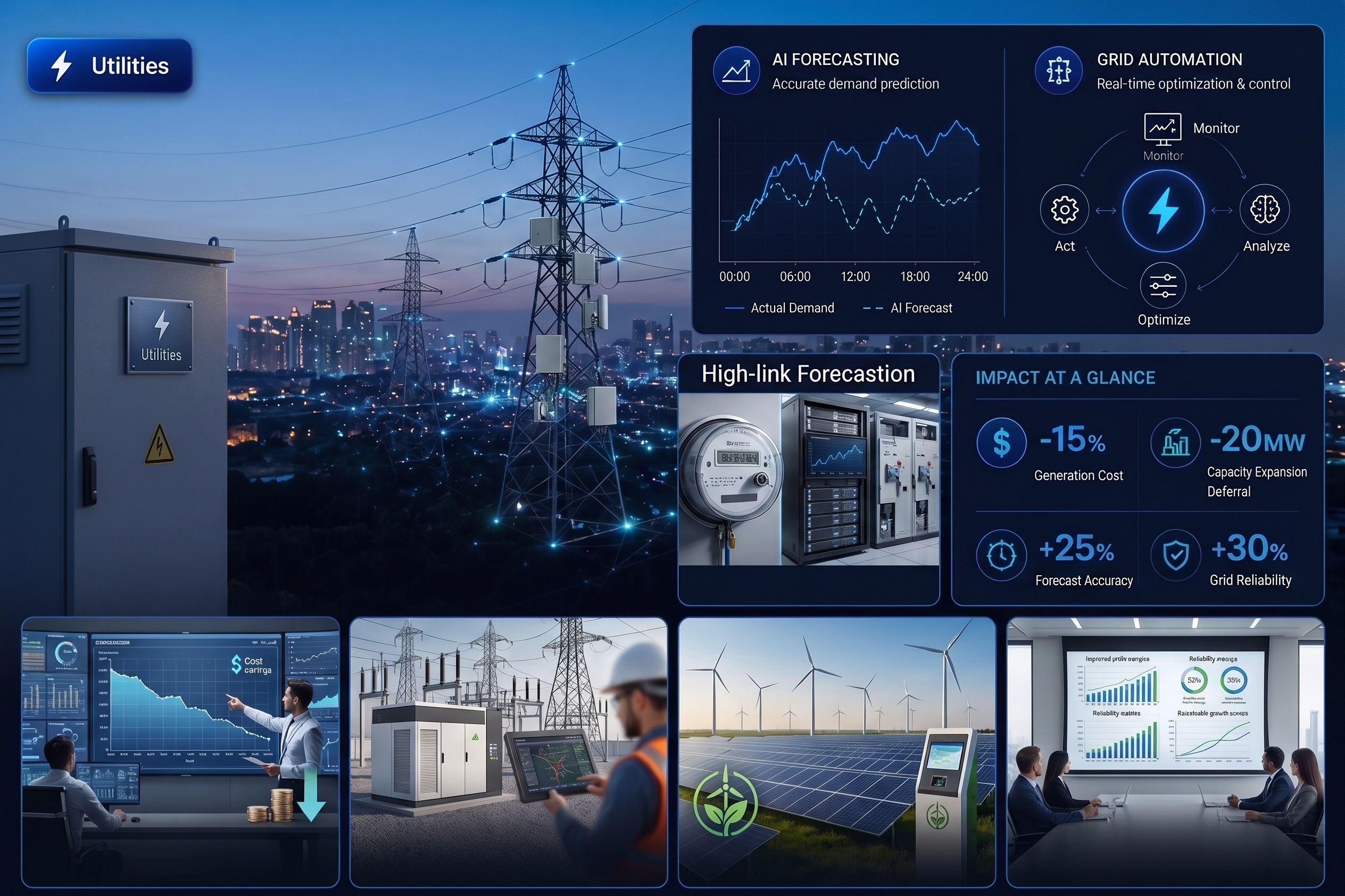
Use Case – Utilities & Energy
Balancing the Grid in Real Time
We help electric utilities predict supply and demand, balance the grid in real time, reduce downtime, and improve user experience.
We help electric utilities predict supply and demand, balance the grid in real time, reduce downtime, and improve user experience.
The electric utilities sector has great potential to embrace artificial intelligence in the coming years. At every step of the value chain, from power generation to end consumers, opportunities for machine learning, robotics, and decision-making automation exist that could help electric utilities better predict supply and demand, balance the grid in real time, reduce downtime, maximize yield, and improve end-users’ experience.
Renewable energy’s growing share of the mix has introduced real volatility into energy supply, swings of up to 60 percent aren’t unusual. Demand swings just as hard, shifting by time and region, with weather and events like the Super Bowl creating sharp demand spikes that can last less than an hour.
After a wave of investment in the 1970s and 1980s, transmission and distribution companies faced financial constraints and regulatory pressure to hold down costs and rates. That meant far less money went into network improvements over the following decades. Today’s grids are poorly equipped to smooth out these spikes, and excess power regularly gets lost at a high cost.
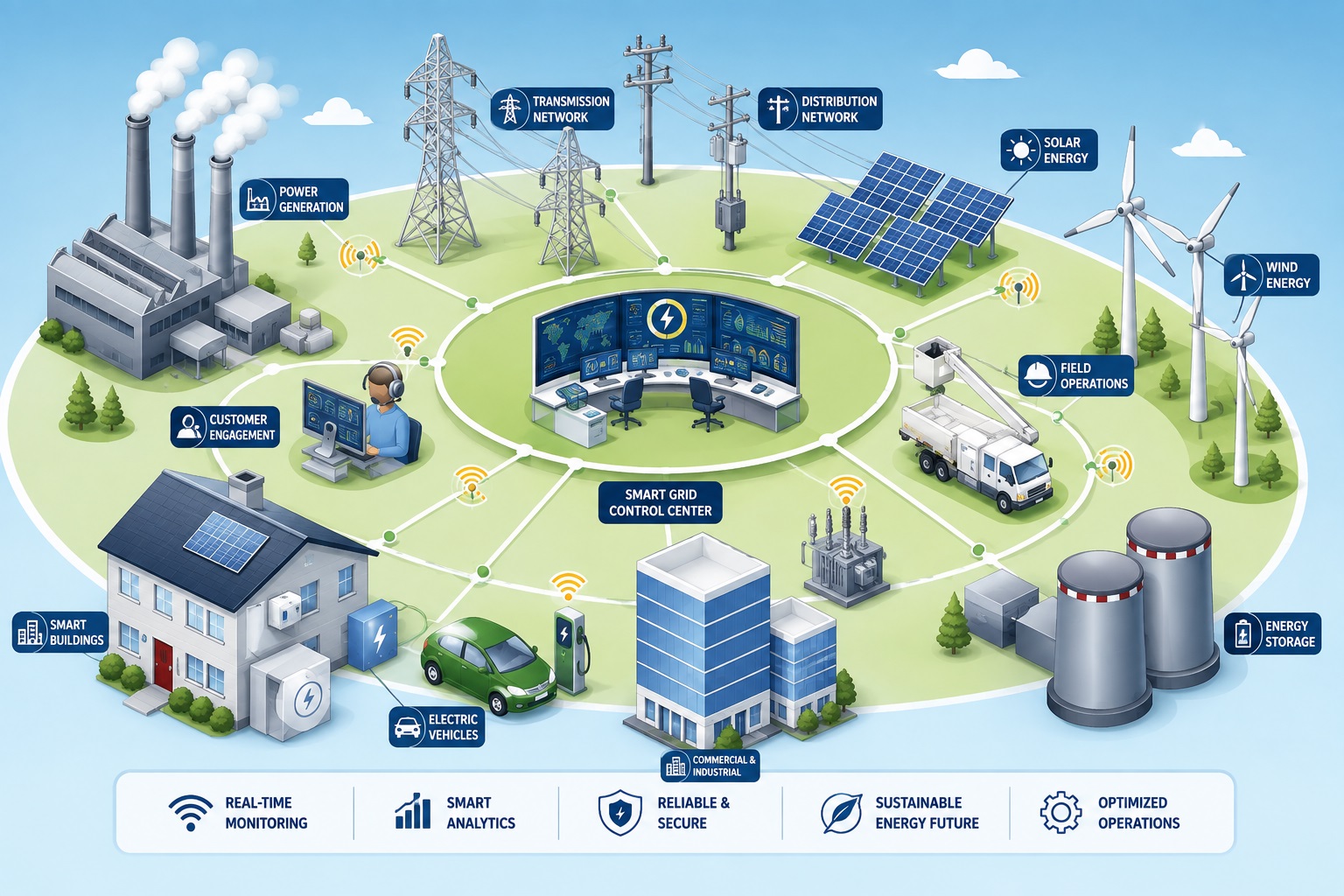
An increasingly complex web of stakeholders and assets, aging critical infrastructure, unpredictable demand and supply, non-linear power loads, cost pressures, and price deregulation are all building real momentum behind AI and robotics in the sector.
Machine learning applications can tailor electricity prices using the huge volume of data now flowing in from smart meters and other connected sensors. Down the line, if regulators open the door to dynamic tariffs, utilities could adopt machine learning-based dynamic pricing. That would let them protect margins, cut customer churn, and get more out of their assets at the same time. Time-of-day pricing is one example: nudging customers to shift non-essential usage to early morning or late evening, when demand runs lower.
Energy retailers could also use AI to build custom perks, lower rates or extra service, to keep their highest-value, highest-volume customers. Price sensitivity matters for winning new customers and reducing churn, but machine learning also tackles another piece of the marketing puzzle: figuring out which customers are actually the most profitable ones to keep.
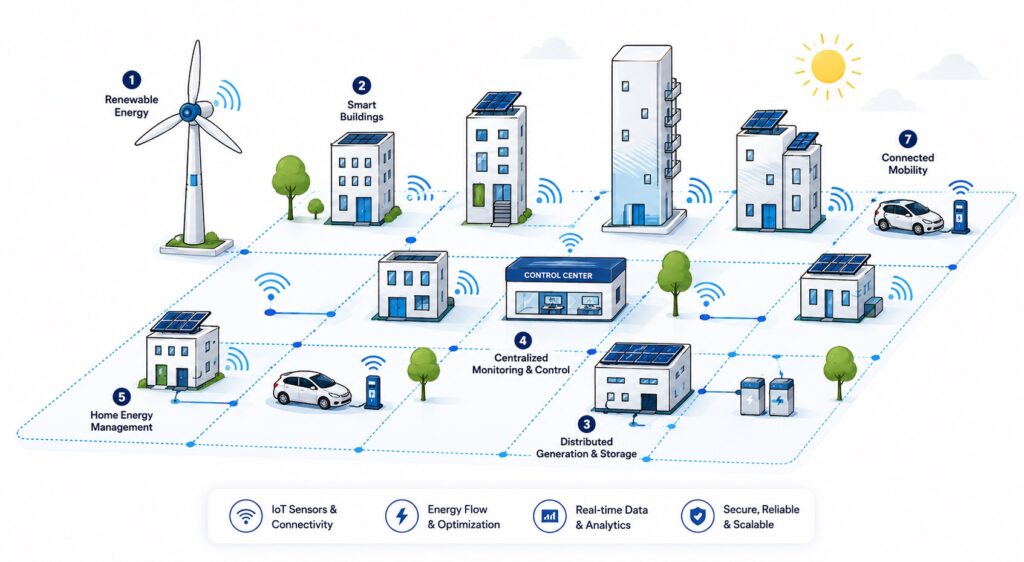
he rise of smart grids worldwide also opens a path for AI to support energy trading, not just for utilities but for “prosumers,” consumers who can sell their excess power back to grid operators. Data and analytics are reshaping how markets connect buyers and sellers across many industries, and grid operators are no exception. Large-scale digital platforms can make a real difference as electricity demand and supply shift constantly, helping produce faster, better matches between the two. These platforms could transform energy markets by letting smart grids pull in distributed energy from many small producers.
In the Netherlands, some startups already use a peer-to-peer model to connect individual households directly with small producers, farmers, for instance, who generate more energy than they use. Vandebron is one example: it charges a flat subscription fee to link consumers with renewable energy providers, and by 2016 it was supplying electricity to roughly 80,000 Dutch households. Utilities could also use this kind of matching to guide their own trading decisions, whether on volatile over-the-counter markets or through more stable power-purchasing agreements.
Adopting AI opens up a wide range of possibilities for the electricity sector. Picture power generation, distribution, and transmission operations running on automatic optimization. A grid that balances itself without human intervention. Trading and arbitrage decisions made in nanoseconds, at a scale only machines can handle. End-users who never have to hunt for a better supplier or manually adjust the thermostat again.
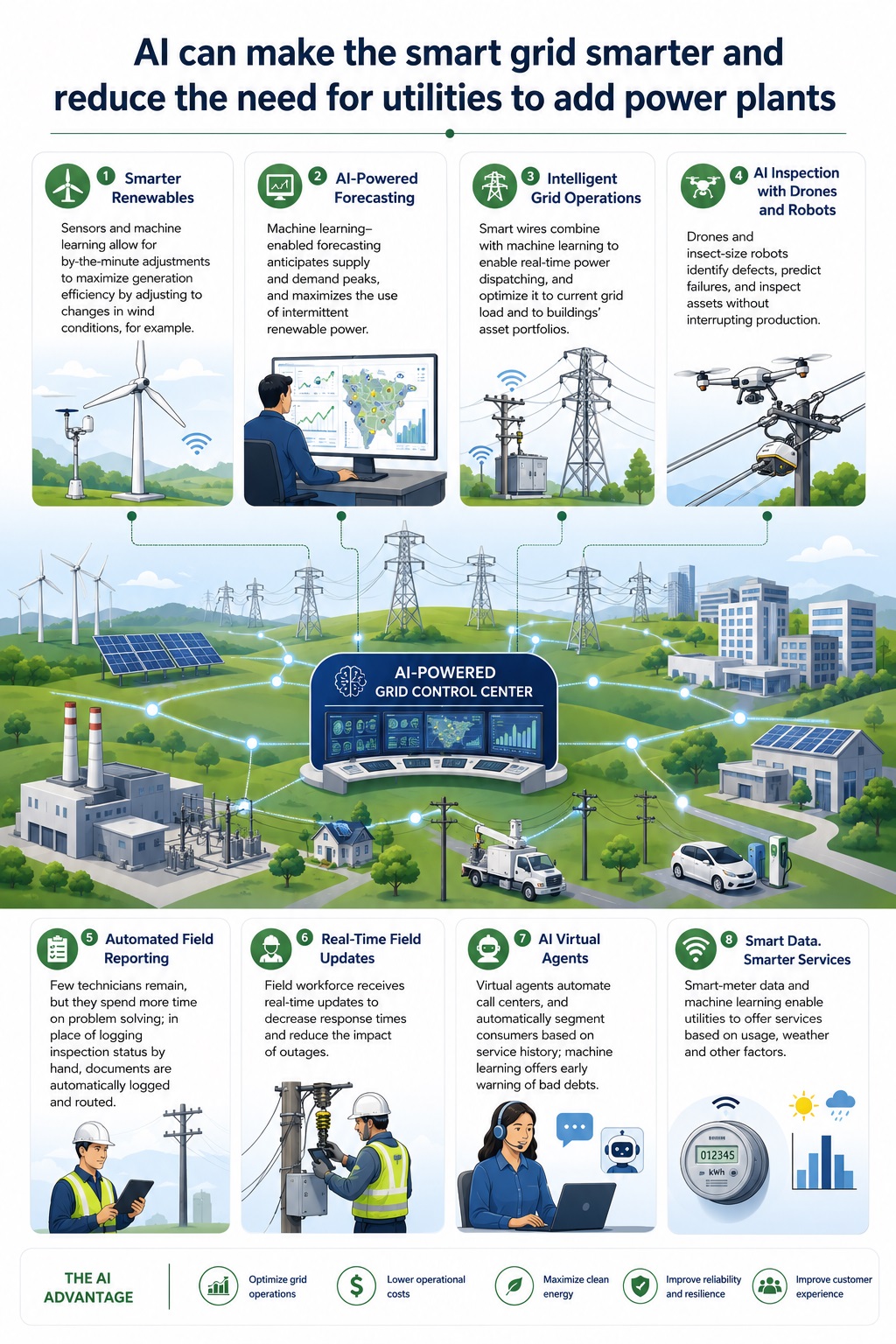
* McKinsey Global Institute — Artificial Intelligence: the next digital frontier?
This page maps out an industry opportunity, not one delivered case study — so rather than force-fit a named AI product onto it, here are the two service lines that actually cover this kind of work as it moves from forecast to pilot.
Forecasting – Segmentation
Turning smart-meter and sensor telemetry into demand forecasts, dynamic pricing models, and customer-profitability scoring is core Intelligence & Analytics work — the same data pipeline underlying every benefit described above.
Automation – Real-Time Decisioning
Real-time grid balancing, automated trading and arbitrage, and supply/demand matching platforms move past reporting and into automated decisioning — which is what our Enterprise AI Solutions practice builds.
neXt Era Technologies can scope forecasting, pricing, and automation pilots around your existing smart-meter and grid telemetry.
Explore our commitment to cutting-edge AI innovation and solution development.
Every case study here is a solution, not a pitch deck. We pulled data from IoT sensors, CRM systems, spreadsheets, call logs, and video feeds, then turned it into decisions that moved revenue, uptime, and patient outcomes. Below are six industries where that work has already paid off.
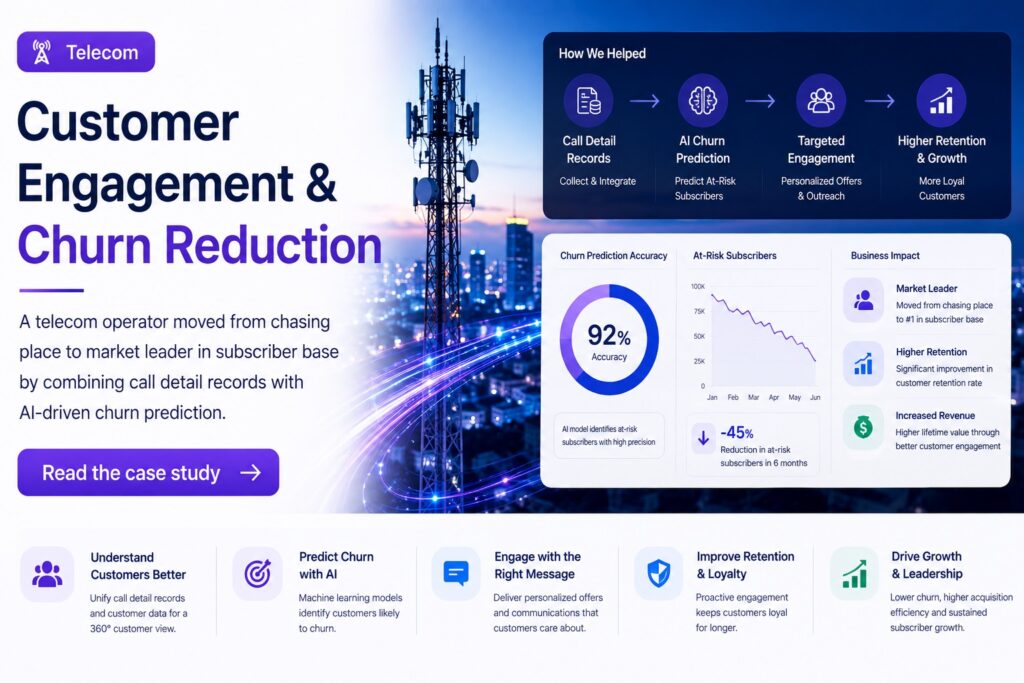
TelecomCustomer EngagementA telecom operator moved from third place to market leader in subscriber base by combining call detail records with AI-driven churn prediction.
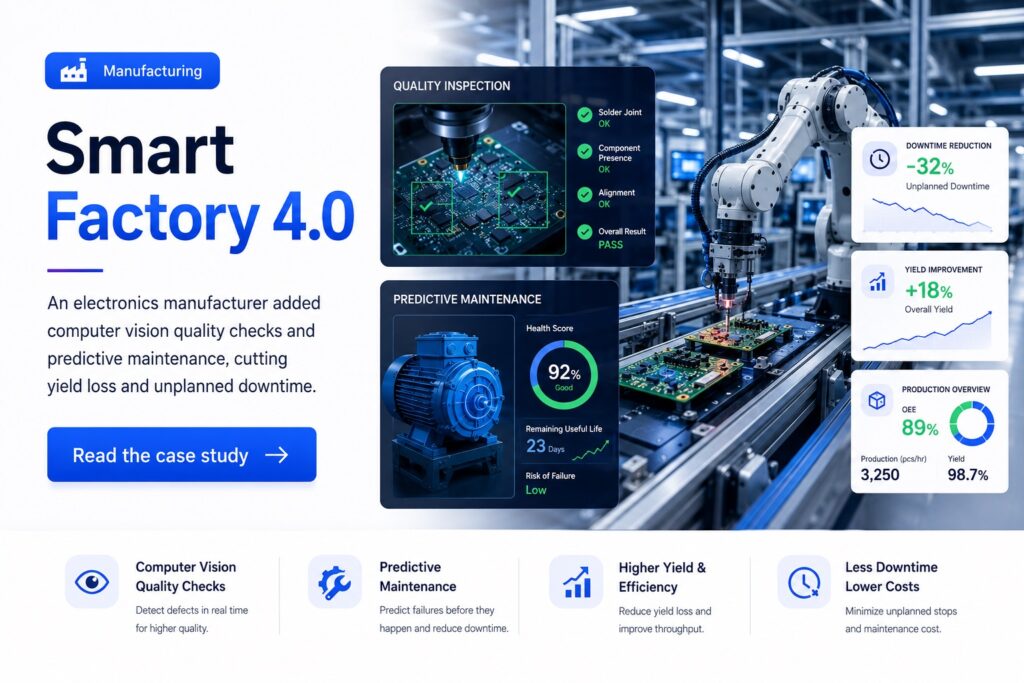
ManufacturingSmart Factory 4.0An electronics manufacturer added computer vision quality checks and predictive maintenance, cutting yield loss and unplanned downtime.
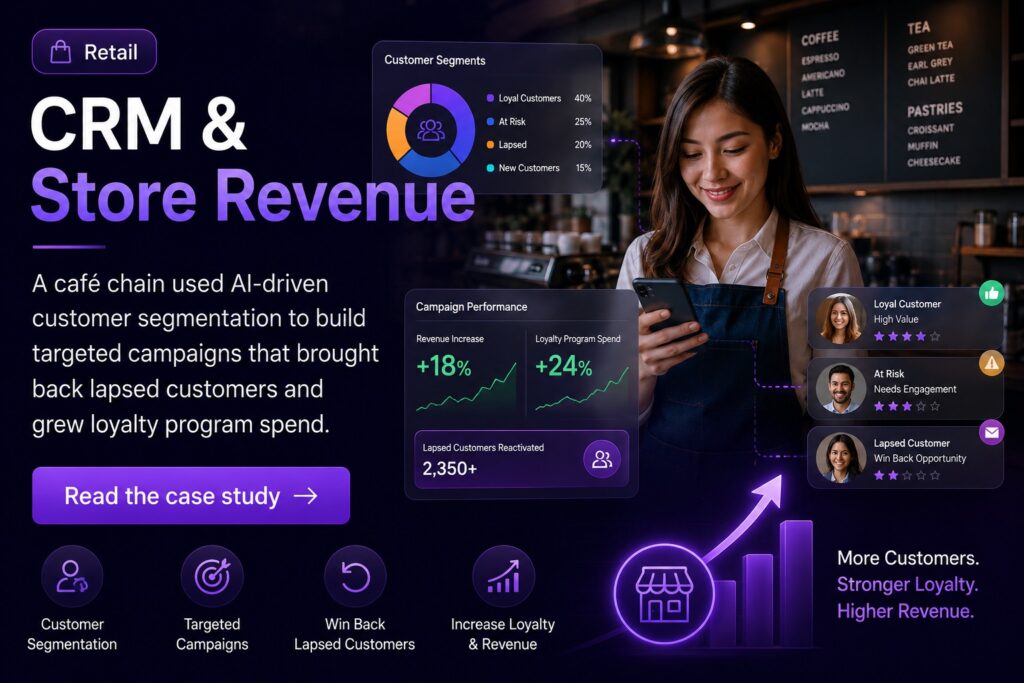
RetailCRM & Store RevenueA café chain used AI-driven customer segmentation to build targeted campaigns that brought back lapsed customers and grew loyalty program spend.
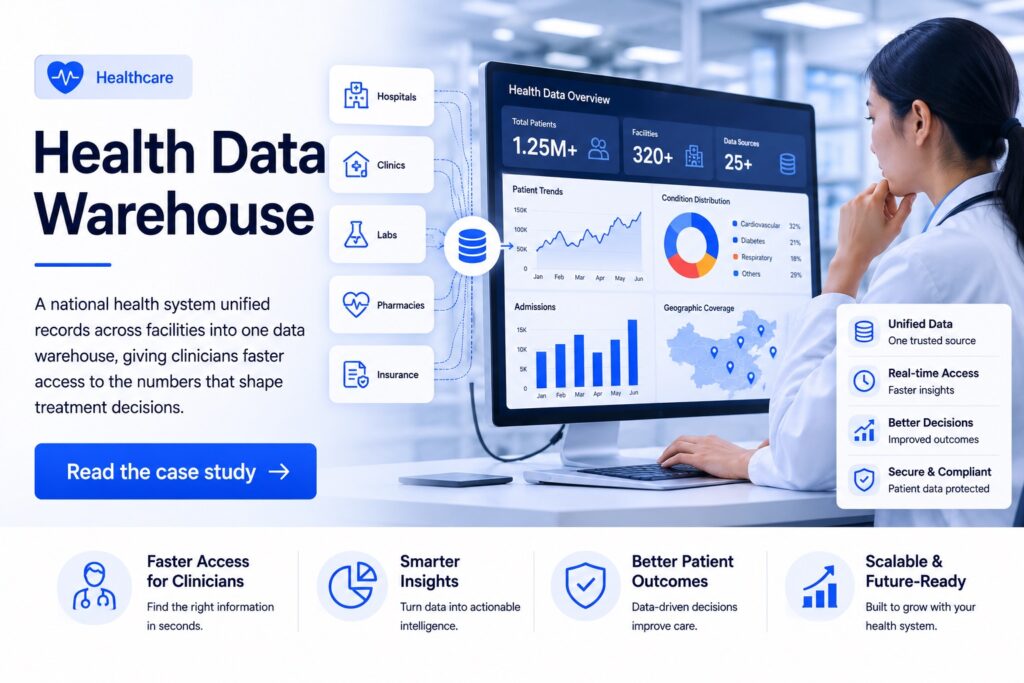
HealthcareHealth Data WarehouseA national health system unified records across facilities into one data warehouse, giving clinicians faster access to the numbers that shape treatment decisions.
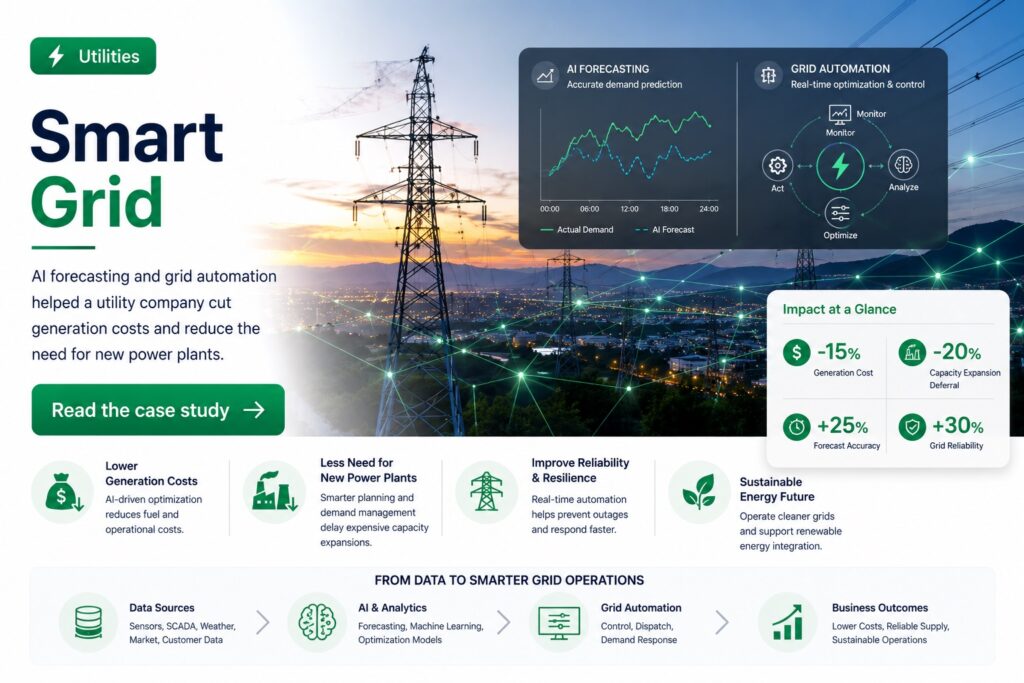
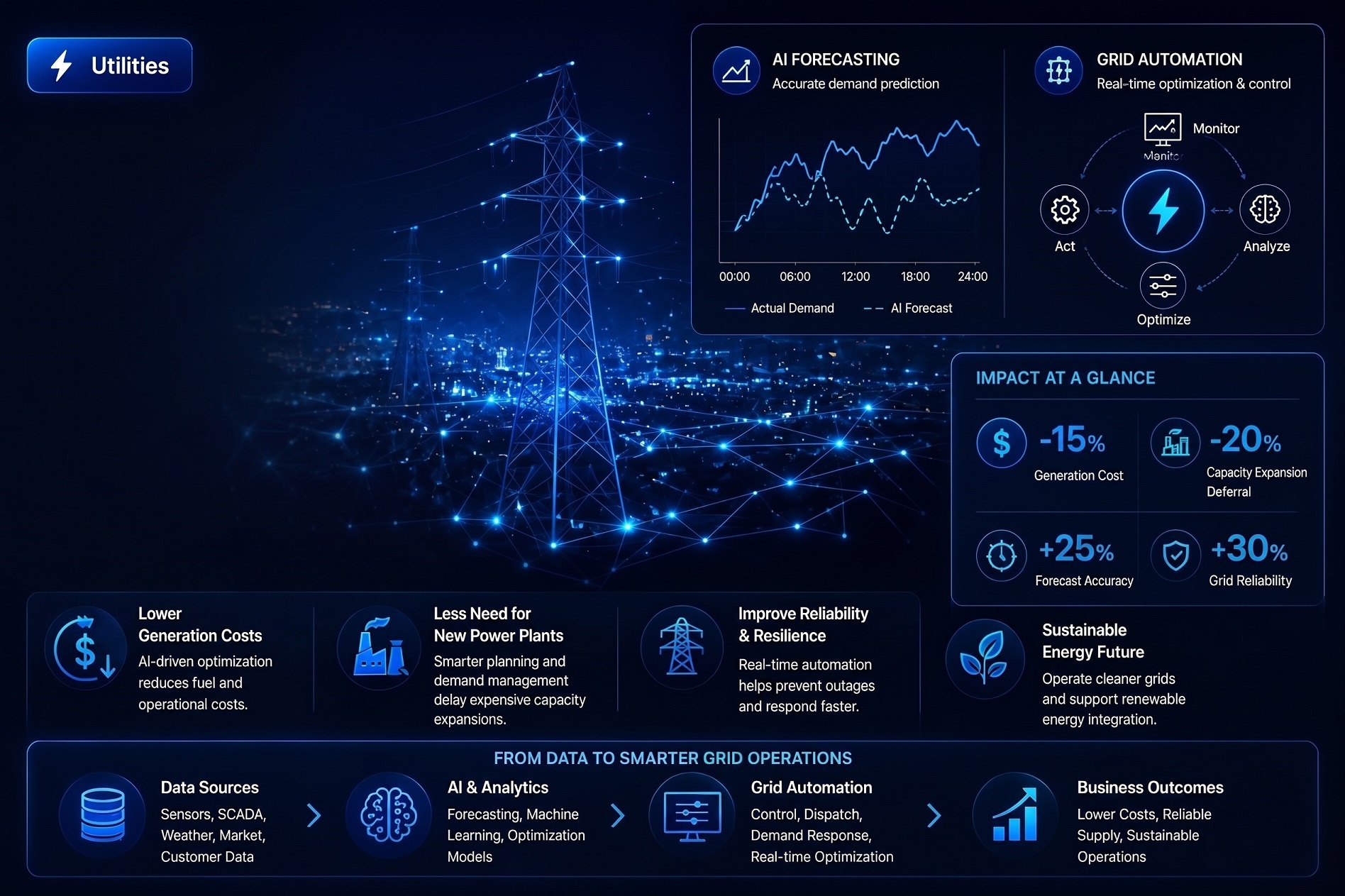
UtilitiesSmart GridAI forecasting and grid automation helped a utility company cut generation costs and reduce the need for new power plants.
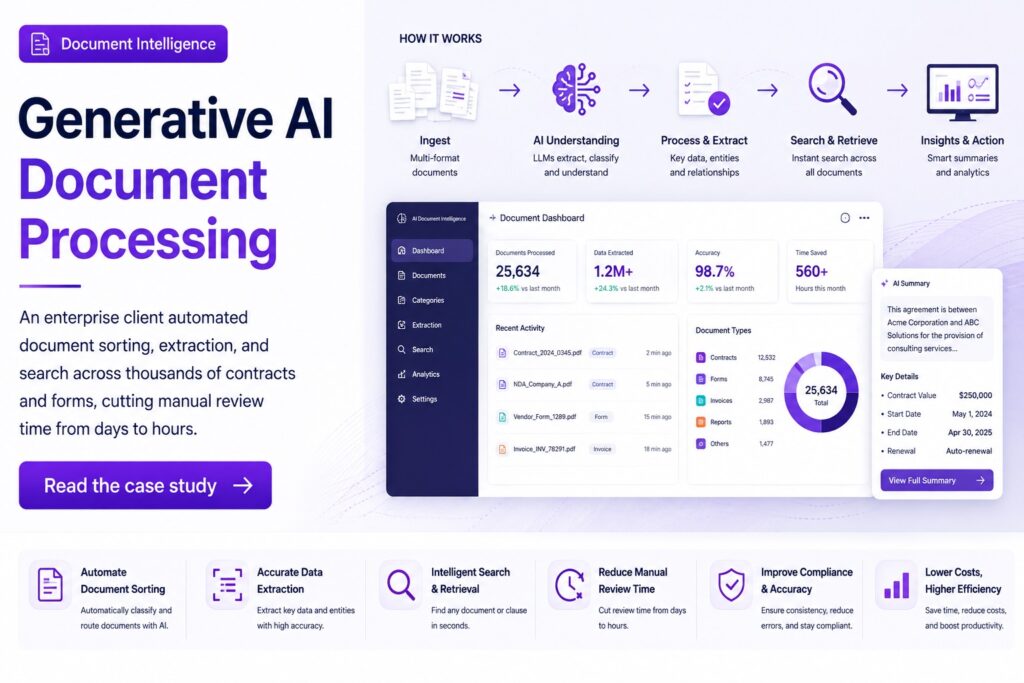
Document IntelligenceAI Document ProcessingAn enterprise client automated document sorting, extraction, and search across thousands of contracts and forms, cutting manual review time from days to hours.
Connect directly with our senior AI and systems architects. We analyze feasibility, constraints, and expected ROI before proposing a product, service, solution, or a formal deployment plan.