Description
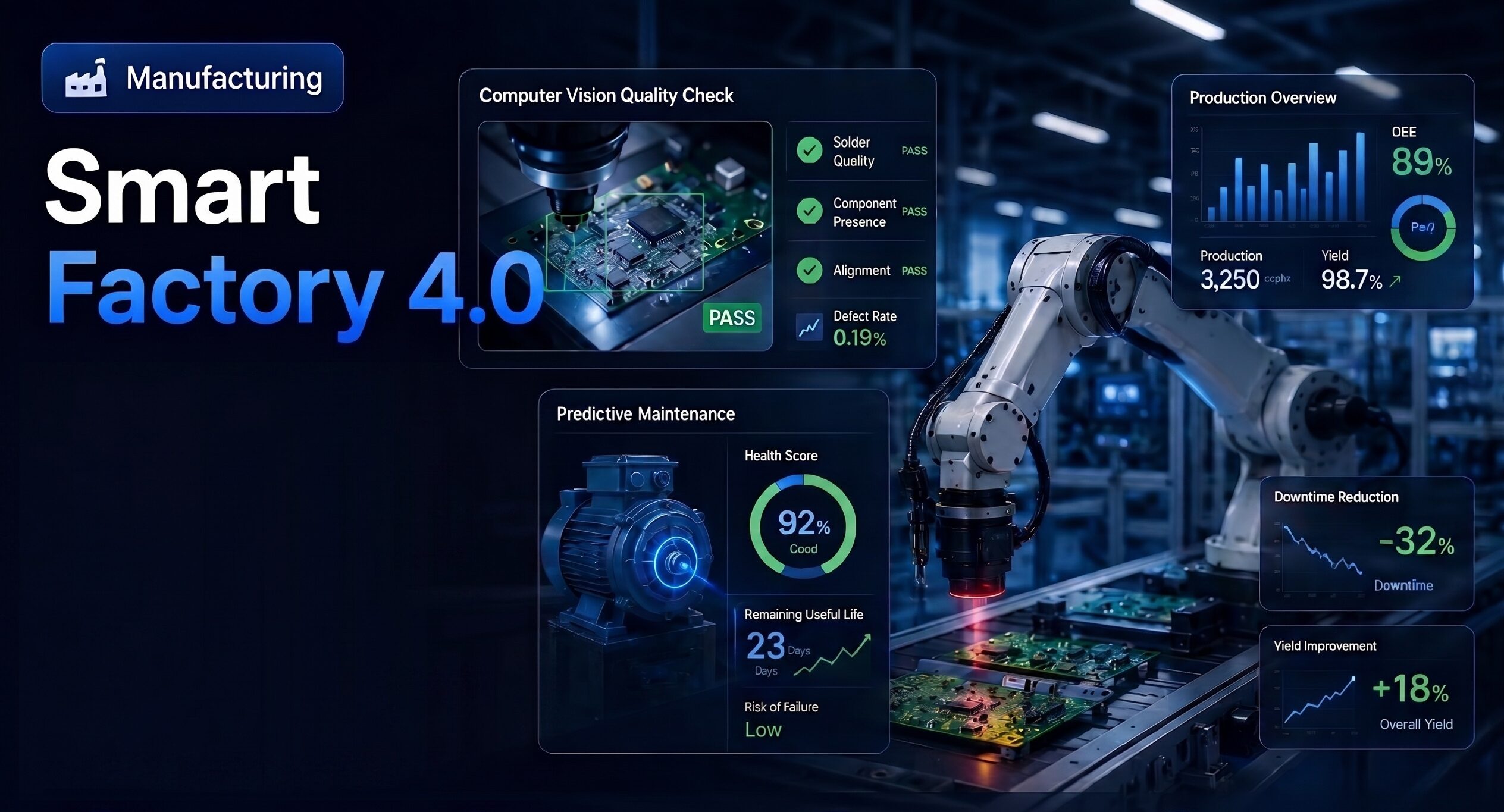
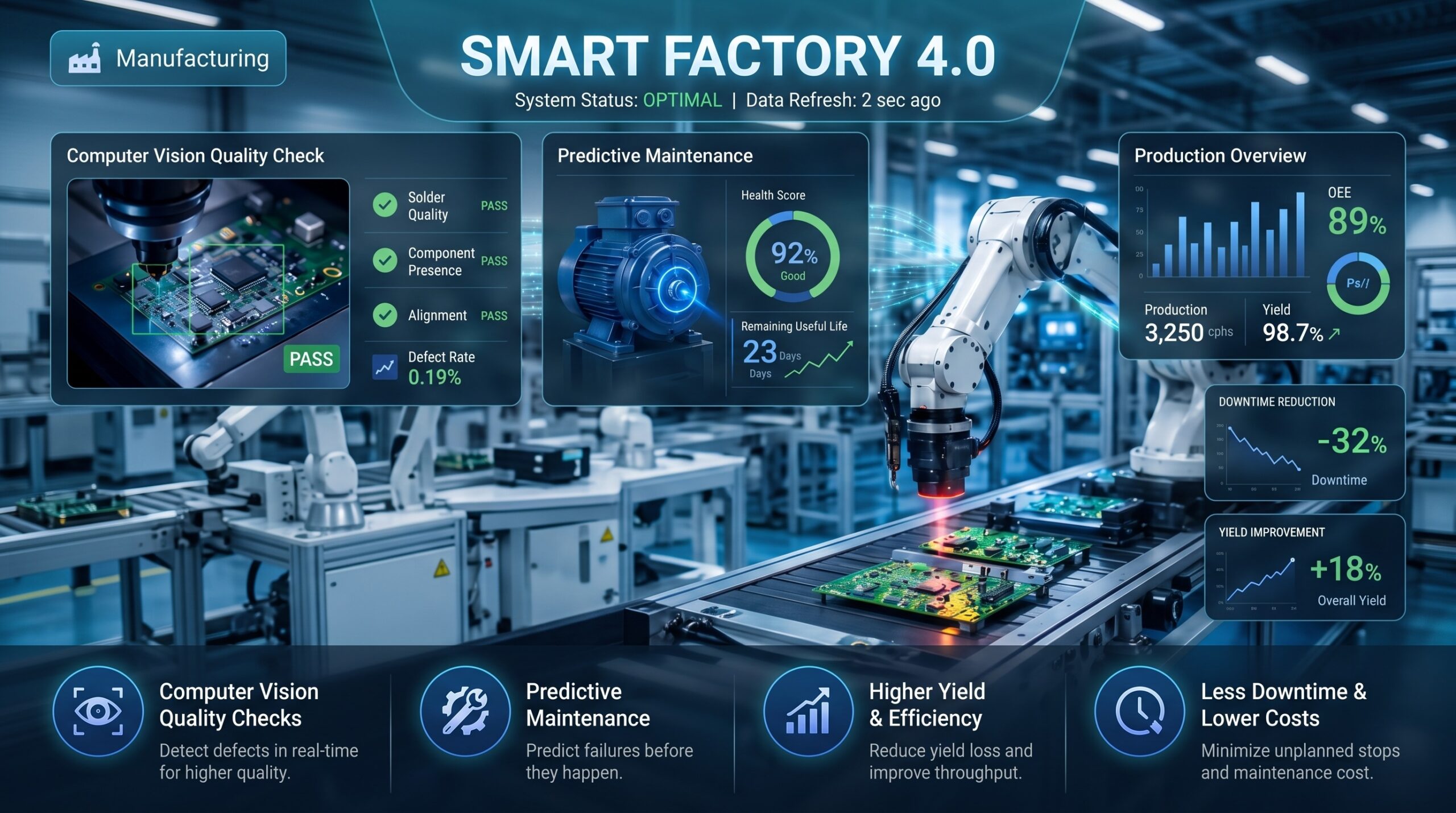
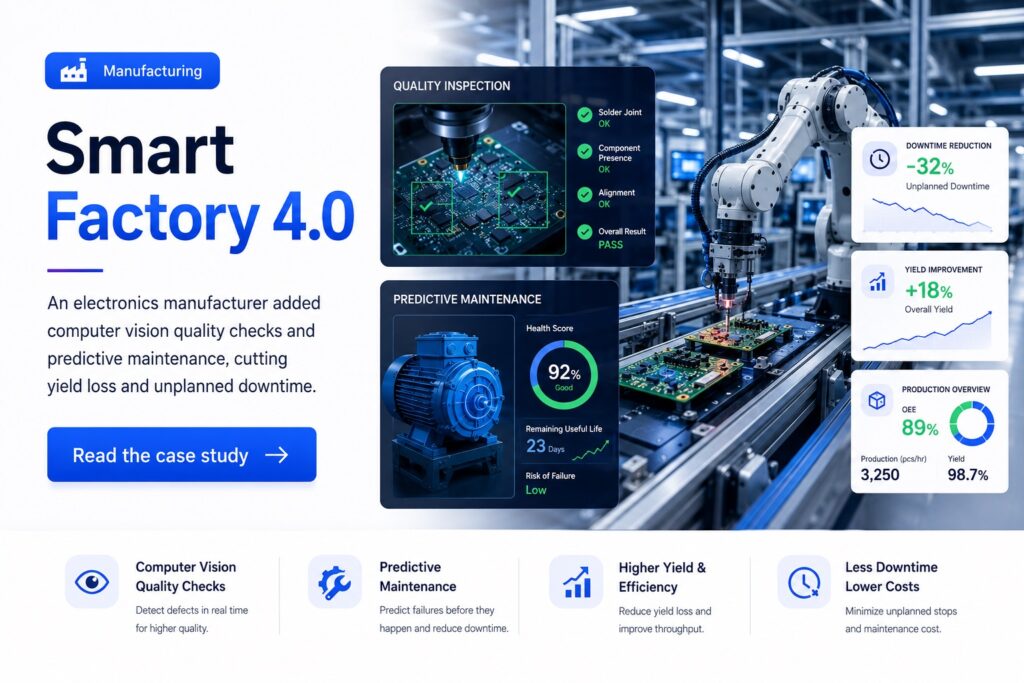
Transform factory data into real-time intelligence. AI, Computer Vision, Industrial IoT, and predictive analytics help manufacturers detect defects, predict equipment failures, improve production quality, and reduce unplanned downtime.
Challenges
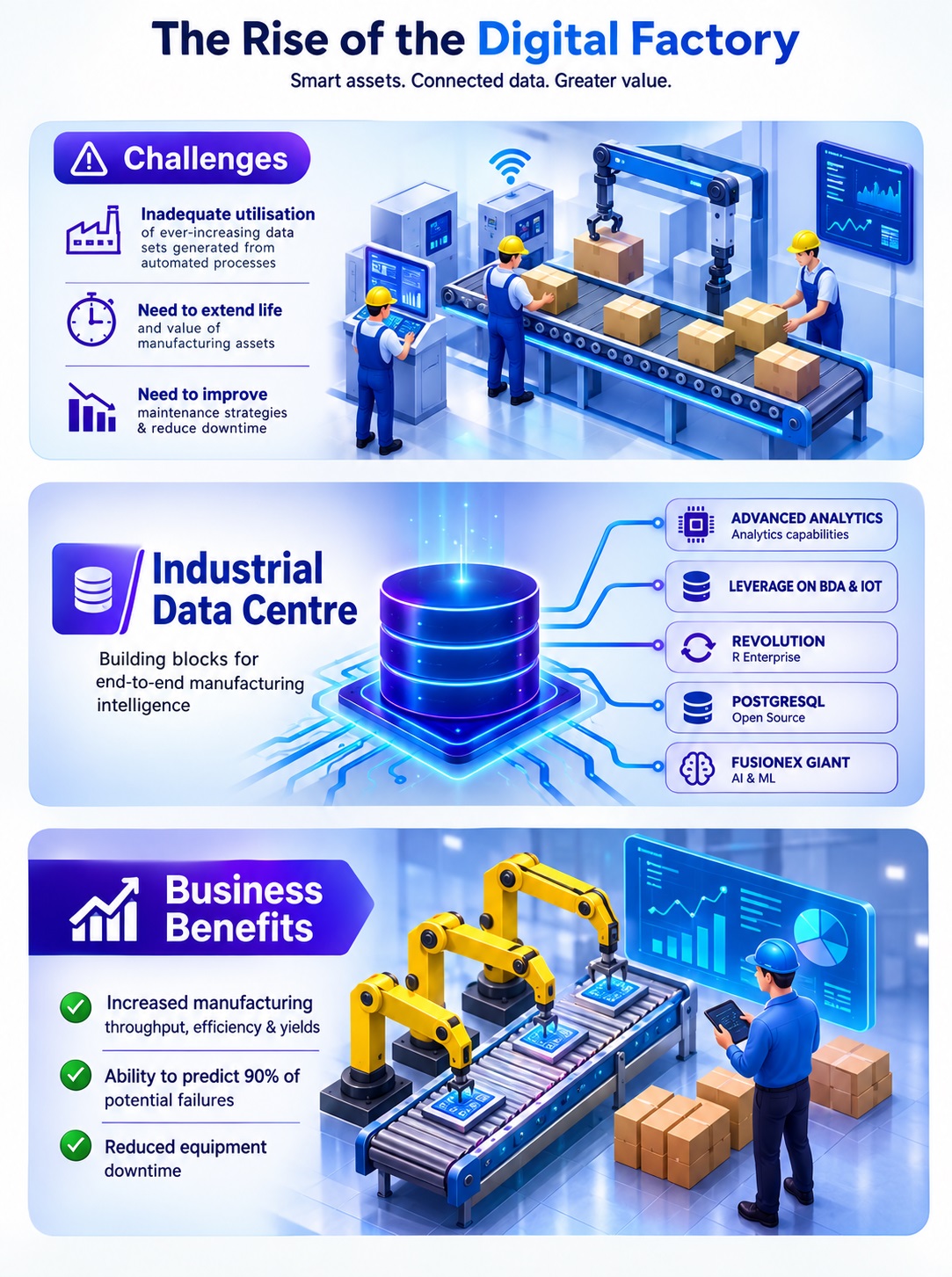
The company noticed its automated systems were producing more and more data that nobody was putting to real use. Data sitting on the network and the shop floor had untapped potential. Connected through IoT, it could sharpen decision-making and push manufacturing efficiency, yield, and quality higher.
The company also needed a big data analytics solution built to handle the sheer scale and variety of manufacturing data, structured, semi-structured, and unstructured, and turn it into something actionable. The goal was to extend the working life of its manufacturing assets by using that data to improve maintenance and head off expensive downtime before it happened.
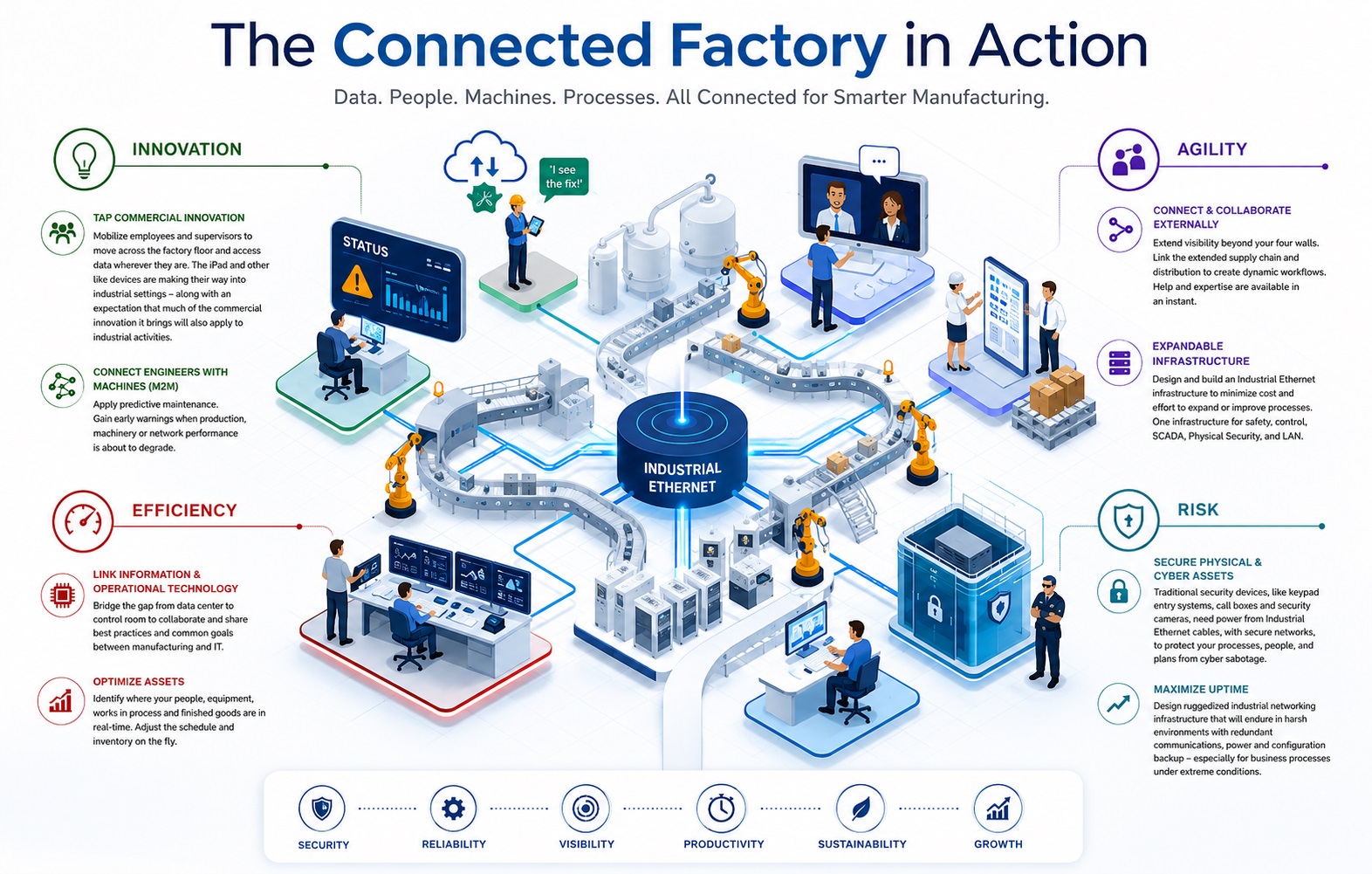
The company wanted a full solutions matrix: a set of end-to-end building-block suppliers that could carry manufacturing intelligence all the way from the factory floor to the Industrial Data Center. Scalable infrastructure mattered. A clear path to ROI mattered. And so did the ability to pull statistical value from manufacturing data across different sources to set its operations apart from the competition.
Technical Solution
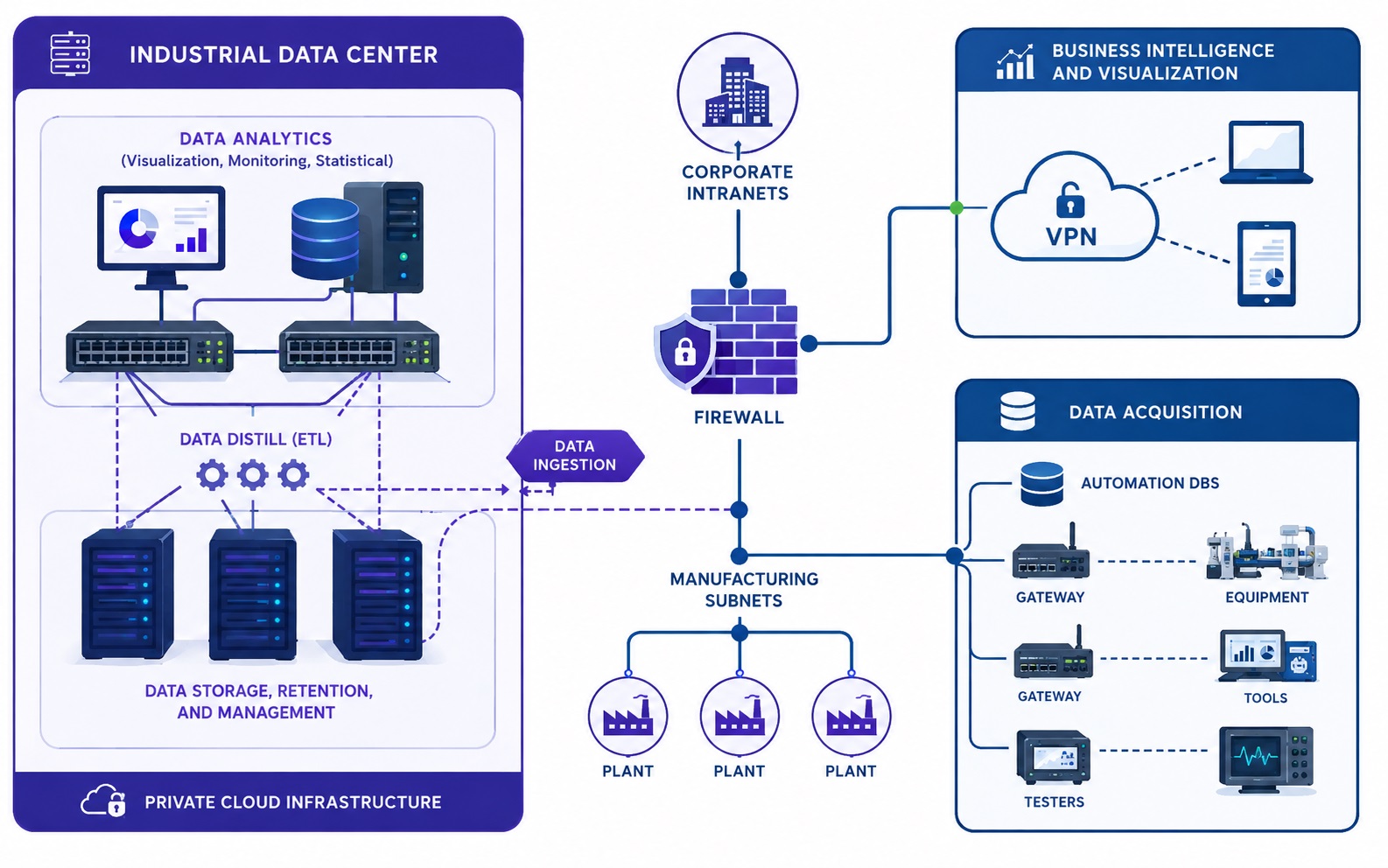
The end-to-end manufacturing intelligence solution, spanning the factory floor to the IDC, also drew on software and hardware building blocks from several technology partners.
Building blocks for end-to-end manufacturing to enable intelligence.
The IDC serves local factory operations and sits right in the manufacturing shop floor control room. Each IDC ran on an enterprise-grade hardware platform hosting the data analytics and application software, alongside Hadoop nodes running across multiple virtual machines.
The analytics and application software workloads included a commercial statistical computing platform, an open-source object-relational database, and a big data analytics engine.
The pilot programme also rolled out IoT gateway devices to transmit manufacturing data straight from factory equipment to the IDC.
Business Benefits
The solution delivered four main benefits: higher manufacturing throughput, better yields, improved efficiency, and less downtime. Results also showed up in three distinct problem areas, each involving different data types and production processes.
The company cut non-genuine production yield loss by monitoring machine parametric values and swapping out parts before they failed. Monitoring and analytics predicted up to 90 percent of potential test equipment failures, and the early warning meant defective test equipment got replaced before it produced incorrect diagnoses. That cut yield losses from false fault diagnoses by 25 percent.
Yield losses also dropped by reducing incorrect ball assembly in ball attach equipment. By visualizing and correlating sensor readings against machine and execution data, the team minimized incorrect ball placement in solder ball attach equipment. That meant fewer yield losses, lower maintenance costs, and fewer sudden equipment shutdowns.
Image classification helped sort good units from defective ones. Image analytics picked out defective units from a pool of marginal ones ten times faster than manual inspection, cutting the time needed to confirm product quality.
The Future
The pilot project is forecast to save millions of dollars a year, with added ROI on top. The benefits stack up: better equipment component uptime, fewer good units wrongly classified as bad (which lifts yield and productivity), predictive maintenance instead of reactive fixes, and fewer component failures.
There’s still plenty of untapped potential too. Parametric, metrology, product, and equipment data all hold value that hasn’t been mined yet. This project opens the door to squeezing more efficiency and productivity out of the factory, and that’s what sharpens the competitive edge.
Request a Consultation
Question About Our Solutions?
Explore our commitment to cutting-edge AI innovation and solution development.